
Star gods
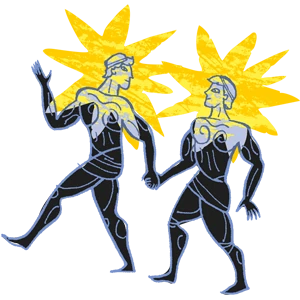
Twin heroes placed among the stars — myths that turned heavenly bodies into ancestors and gods.
An illustrated book about the meanings people have found in the night sky.
For thousands of years, people have looked at the stars and tried to explain what they saw. Some imagined them as ancestors, gods, or living creatures. Others believed they were holes in the sky, heavenly rivers, or signs connected with a person’s fate.
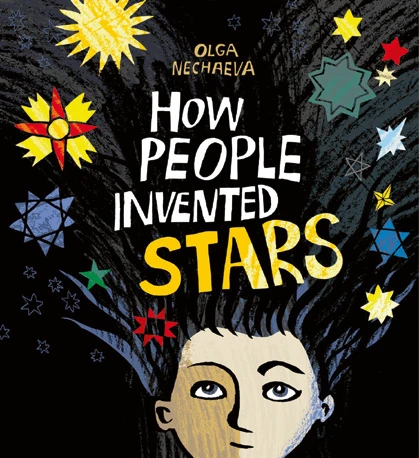
The night sky belongs to everyone, but people have never interpreted it in quite the same way. The book brings together myths, customs, and symbols from Europe, Asia, Africa, the Americas, and Oceania, allowing young readers to compare different ways of seeing the same celestial objects.
The content is not tied to one country or one school system. It can support lessons in history, mythology, religion, visual culture, and introductory astronomy. It also works as independent reading for children who enjoy space, ancient civilisations, flags, symbols, and unusual facts.
The book is intended for primary and lower-secondary school readers. Short thematic chapters and richly composed spreads make it easy to read from beginning to end or to browse one subject at a time.
For parents and teachers, it offers a way to extend the school curriculum without reproducing the tone or structure of a textbook. Familiar objects such as the North Star, the Star of Bethlehem, or the stars on national flags become starting points for wider conversations about science, history, and culture.
A single visual narrative
Twin heroes placed among the stars — myths that turned heavenly bodies into ancestors and gods.
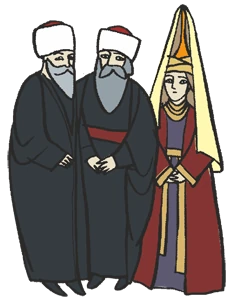
How a single star came to guide travellers — and how faiths around the world have read the sky.
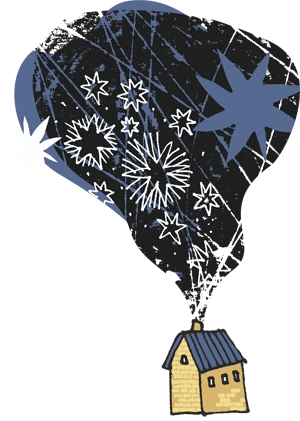
From the roof of a home to the roof of the sky — stars as memory, comfort, and belonging.
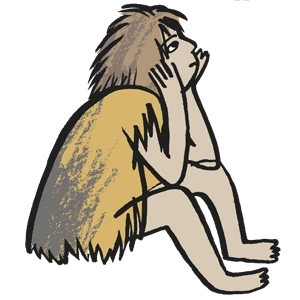
Early peoples who saw their forebears among the stars, looking down over the living.
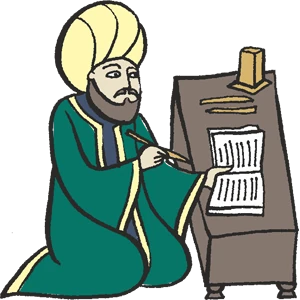
Astronomers and scholars who charted the sky and passed its knowledge down.
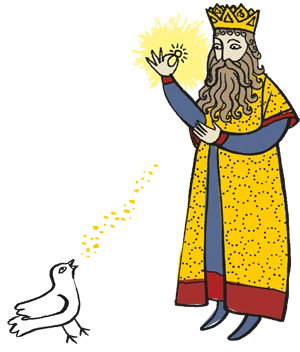
A ring, a star, and a legend of wisdom passed from the heavens to a king.
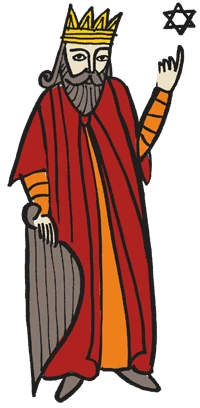
How a six-pointed star became one of the world’s most recognised symbols.
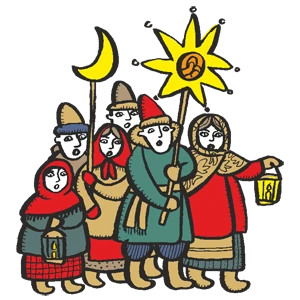
Folk customs where a star, carried through the streets, becomes part of celebration.
The book also keeps scientific knowledge separate from historical beliefs. It explains that objects once described as stars may actually be planets, comets, meteors, constellations, or asterisms, while showing why earlier cultures understood them differently. The text was reviewed by the scientific editor Andrey Borovsky.
The story does not end with ancient myths. Later chapters examine stars in religious emblems, national identities, political movements, professional rankings, sport, and memorial culture. This gives the book a modern dimension and shows children that symbols created centuries ago are still active around them today.
The central image requires no introduction: children everywhere recognise a star. The meanings explored in the book are varied enough to offer genuine discovery in every market.
The title can be positioned as illustrated children’s nonfiction, a family gift book, a school-library resource, or a publication for museums and planetariums. It also fits within a broader series on science, history, and the ideas people used to understand the world.
Its combination of international content, checked text, and distinctive illustrations gives it lasting value beyond a single curriculum or publishing season.
Full PDF and rights information are available from Librorus Sàrl, Switzerland.
info@librorus.com
Published by “A Walk Through History” · Rights catalogue: librorus.com · foreignrights@peshkombooks.ru