Traditions and technologies

Nomads

What if your home did not stay in one place?

For many children, home means a familiar building, a bedroom, and an address. They go out into the world, then come back to the same place.

Some families live differently. They pack up their homes and follow their herds. They sleep aboard boats or carry everything they need in a camper van. Others move between countries, working and learning wherever they settle next.

Nomads introduces children to these ways of living through a question they can immediately understand: how do you make a home when you keep moving?

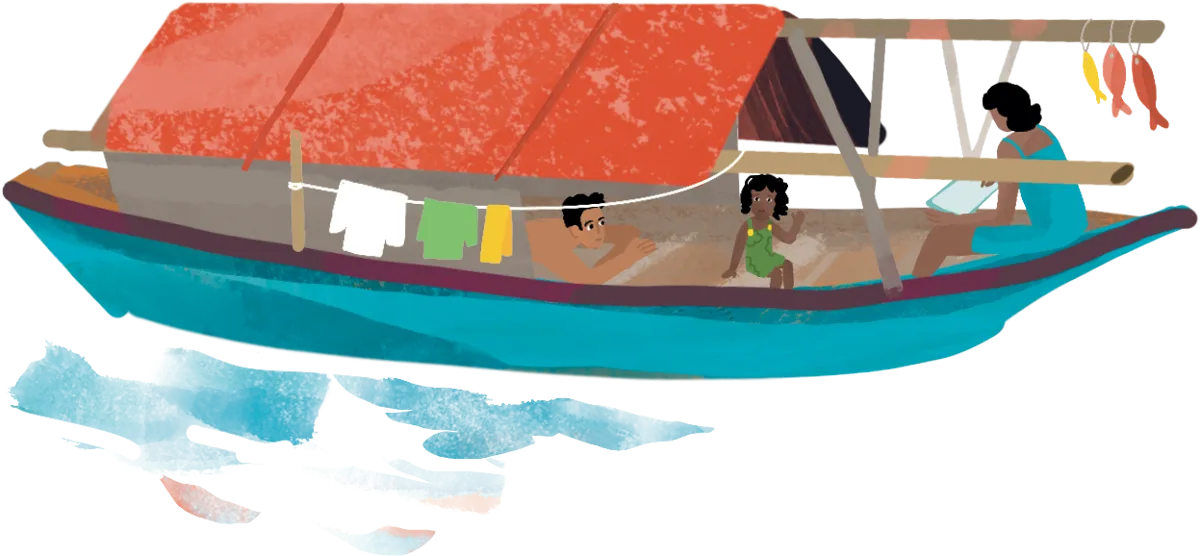
A family living aboard a houseboat, from the cover of Nomads
A child of the Bajau sea nomads holding an octopus

Inside the book

A new way to look at something familiar

Where do you sleep? How do you cook dinner? Where do you keep your belongings? And what do you take when it’s time to leave?

Through illustrated encounters with families and communities, Nomads explores the practical details that make an unfamiliar way of life feel real. Readers step inside Mongolian gers, visit Arctic reindeer herders, explore Bajau houseboats and see how families organise everyday life in camper vans.

Food, clothes, games, and celebrations bring each encounter closer to the reader’s own experience. The differences spark curiosity; the familiar details hold the connection.

For publishers

Three reasons to bring Nomads to your market

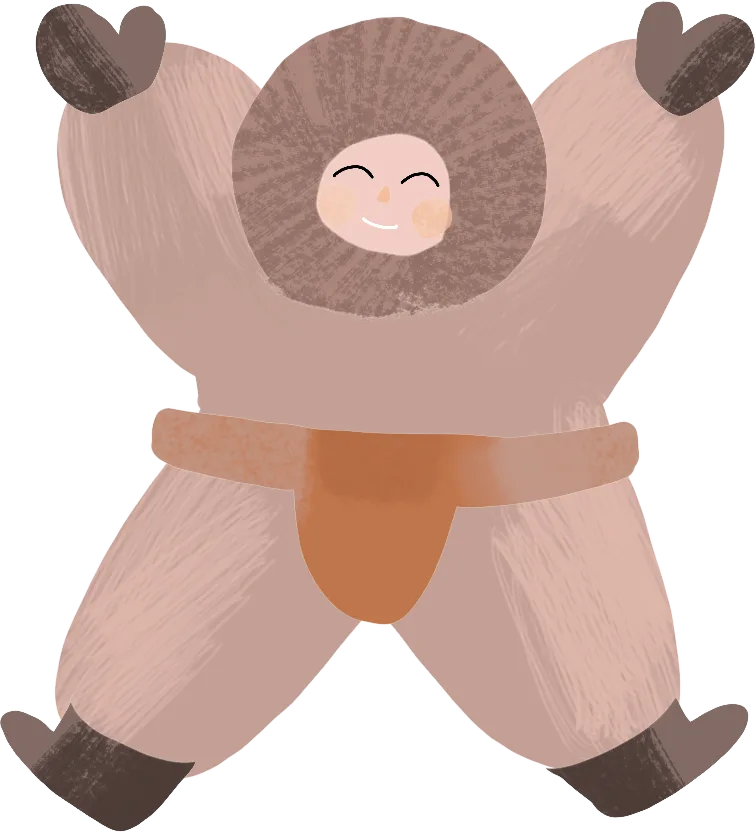
A child in a fur suit from the Nenets chapter

A starting point every child understands

Every child has an idea of home. This book gives them a chance to look at someone else’s.

It asks nothing of the reader in the way of prior knowledge, so the cultural discovery stays accessible even without a background in anthropology or history. For parents, that’s a clear reason to buy: a book that helps children understand lives very different from their own.
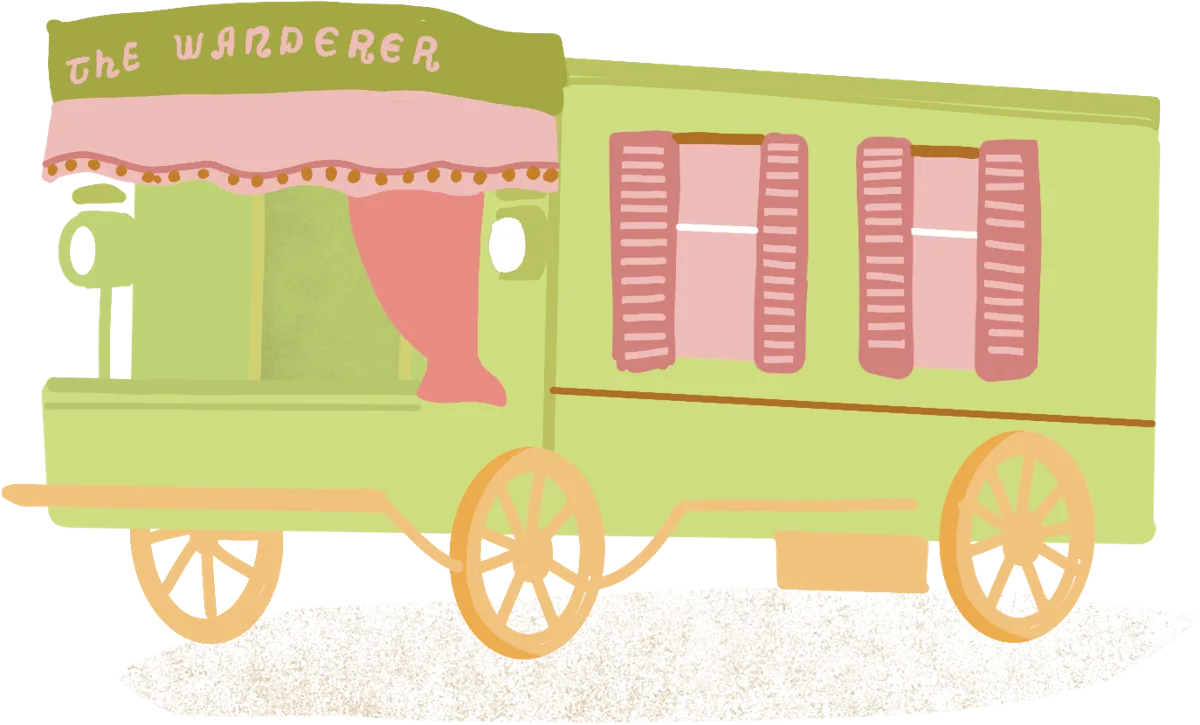
A wanderer’s wagon, an early mobile home

Details that keep children looking

How do you take a house apart and put it back together? How do you fit a kitchen, beds, and belongings into a vehicle? What keeps a family warm in the Arctic?

Homes on the move give children a way into design, materials, and everyday problem-solving. Illustrated scenes and short text sections leave room to look closely, ask questions and come back for another read.
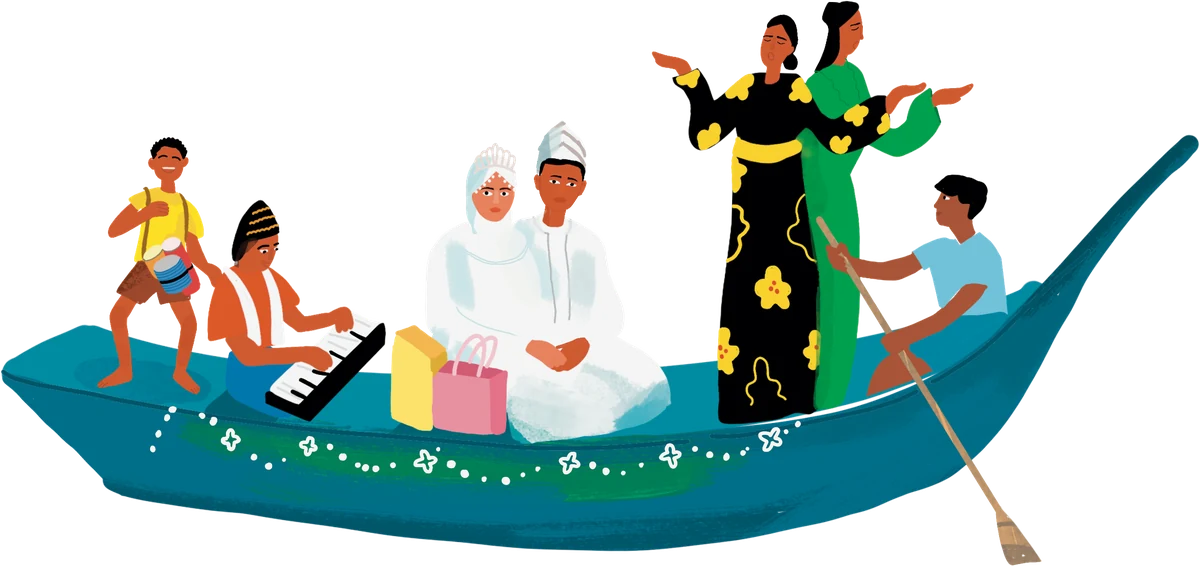
A wedding party travelling by boat, with a keyboard player and dancers

Old ways of living, set beside new ones

The book puts traditional nomadic cultures side by side with van life and digital nomadism, showing that people move for different reasons and build their lives around it in different ways.

For publishers, that gives the subject reach: world cultures, geography, and practical design sit alongside ordinary questions about family, possessions and what “home” means. It works for family reading, classroom discussion, and library shelves.

Different homes. Everyday lives.

A portable home still needs somewhere to cook. A family living on water still needs somewhere to sleep. Children growing up on the move still find ways to play.

Across 96 illustrated pages, Aigul Nigmetova shows how people meet these same needs in very different circumstances, in deserts, grasslands, Arctic landscapes and at sea.

Readers may finish the book seeing their own home a little differently, too.

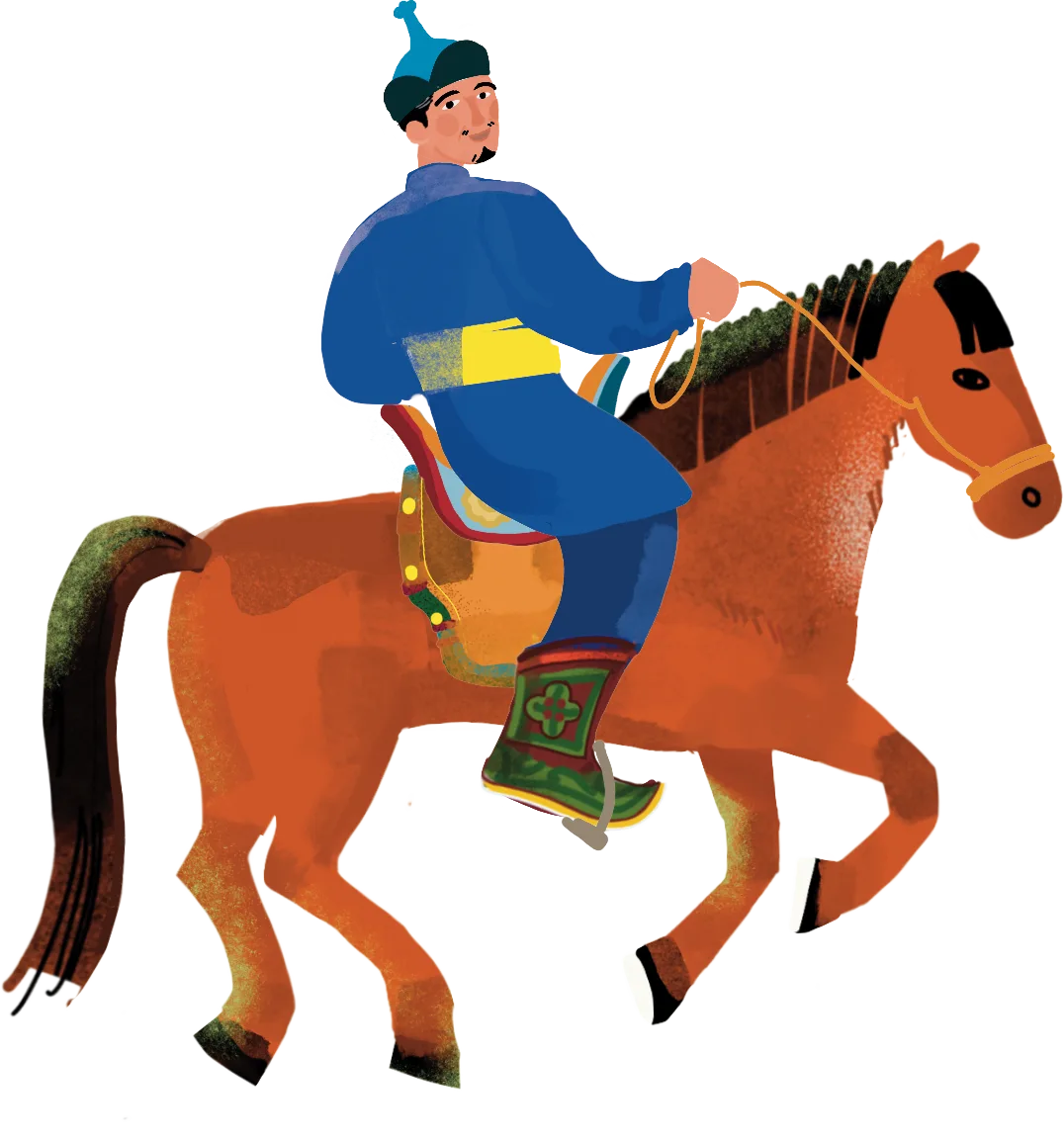
A Mongolian horseman Steppe nomads
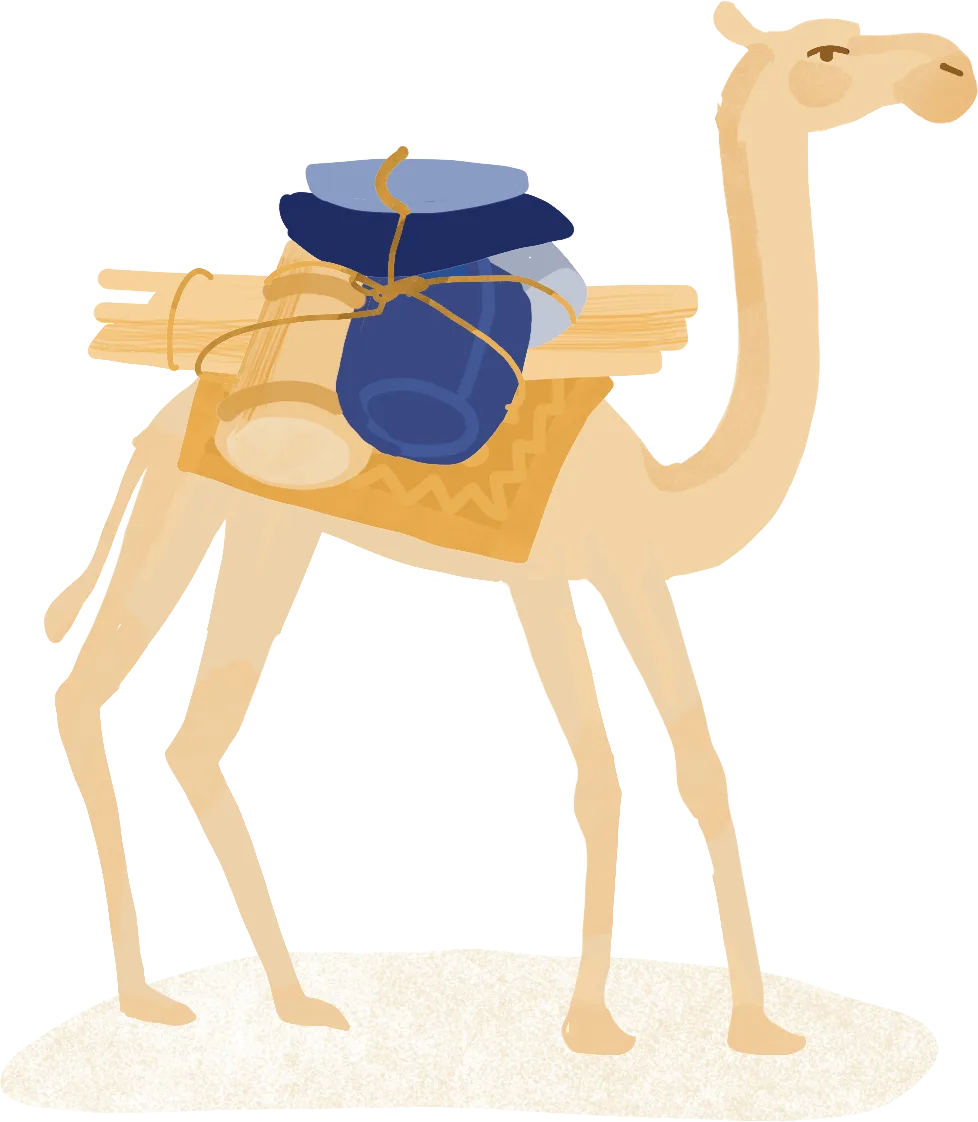
A loaded pack camel Desert nomads
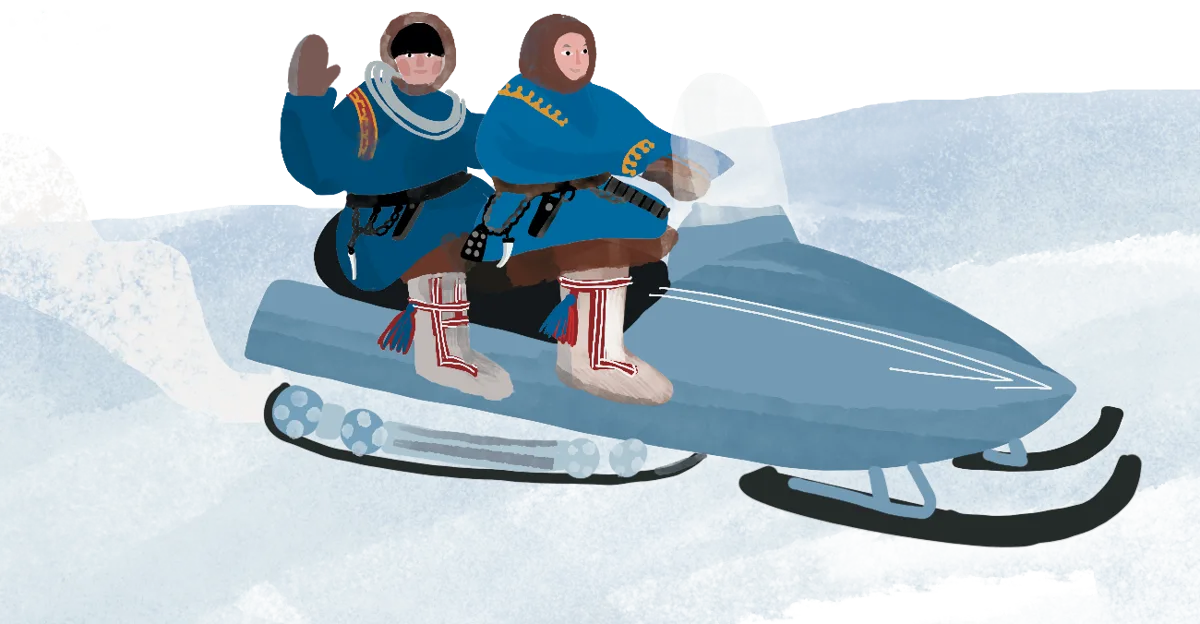
A couple on a snowmobile in the Arctic Northern nomads
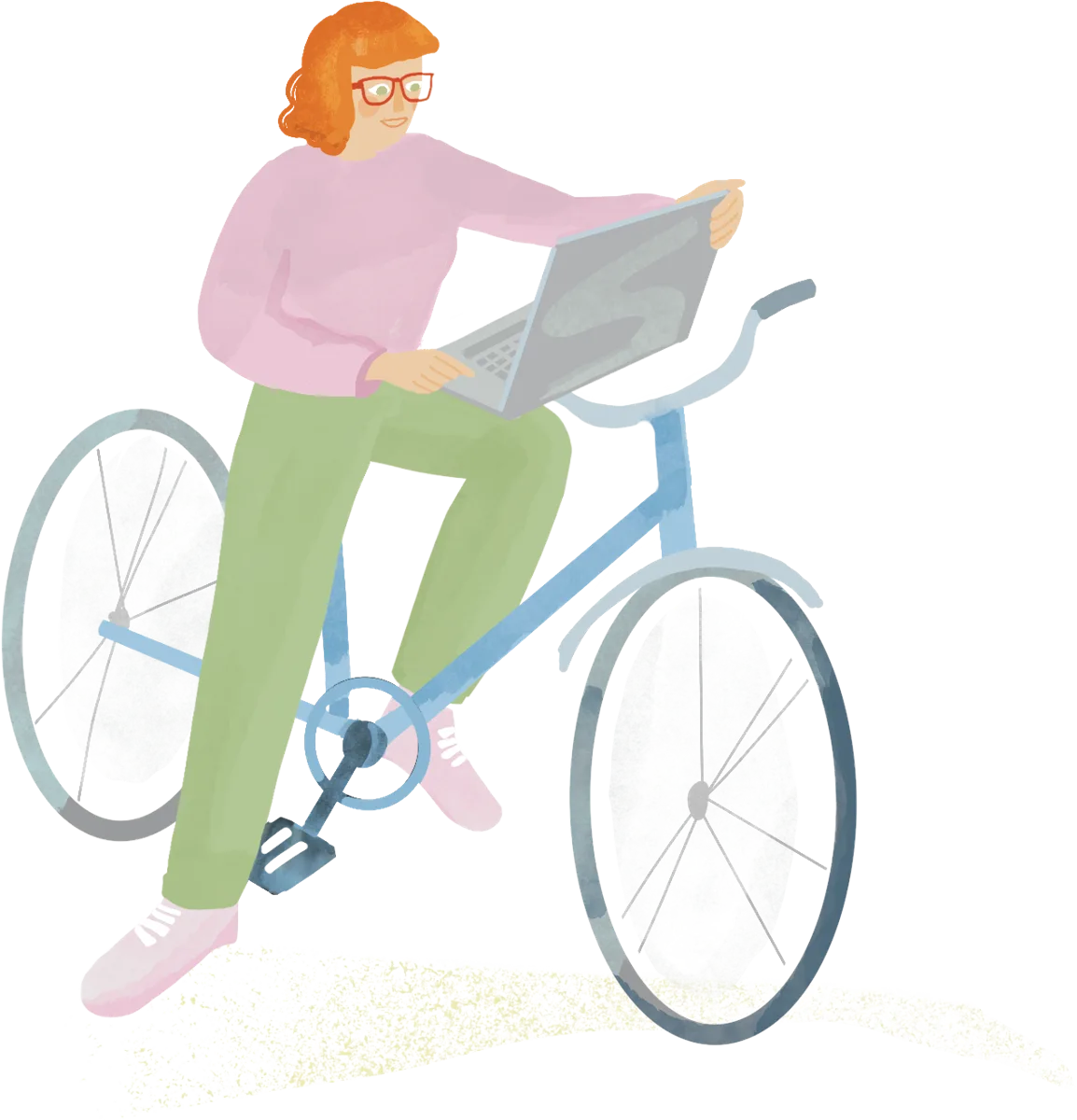
A cyclist working on a laptop, from the Digital Nomads chapter Digital nomads

Sample pages

Sample pages in English

Three spreads from the English edition. Each one is a single home, opened up: the people who live there speak for themselves, and short labelled sections answer the questions children actually ask.

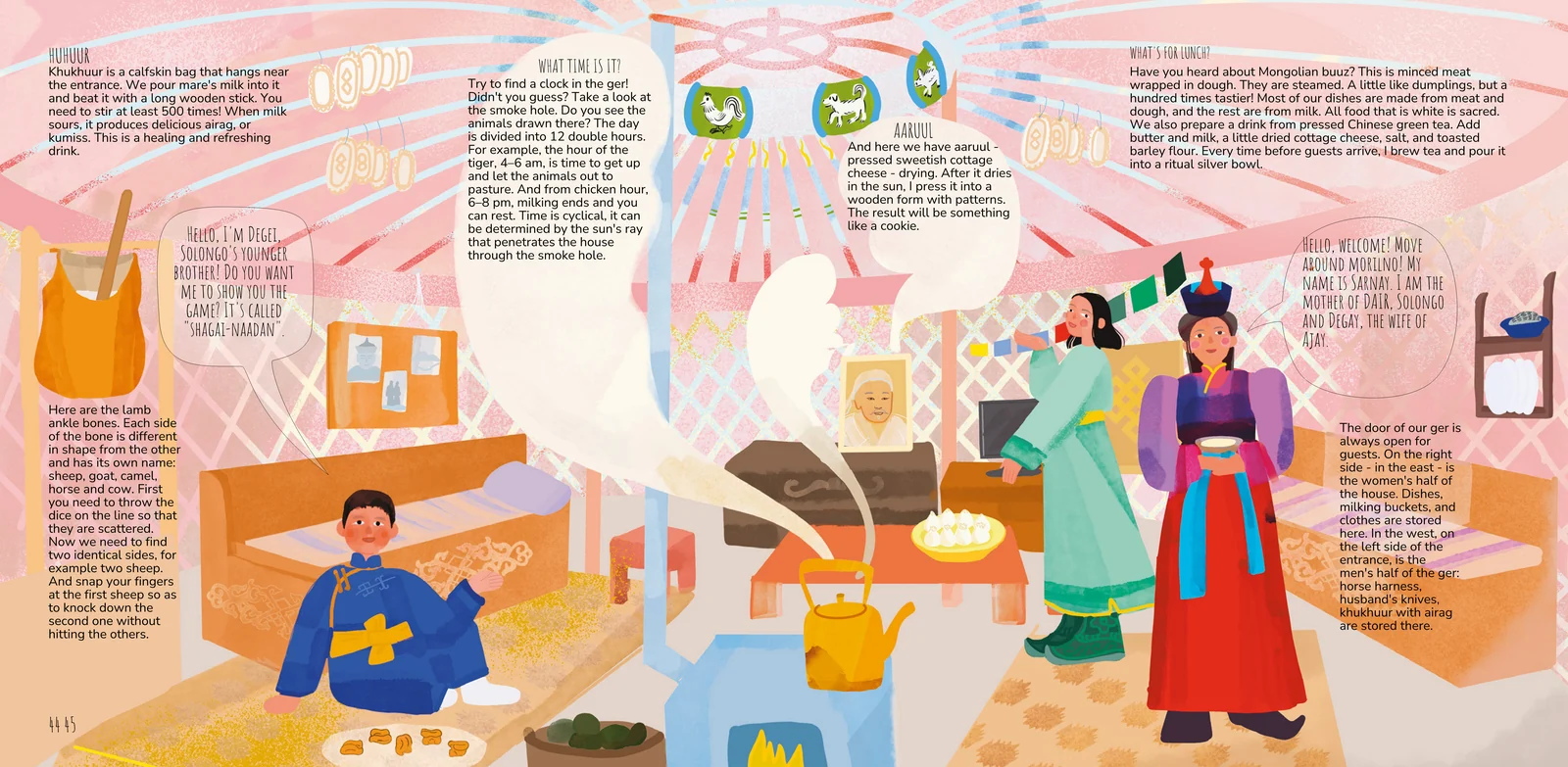
Spread from the Mongols chapter: the inside of a ger, with the family, the stove and labelled sections on food, time and games
Inside a Mongolian ger · pages 44–45
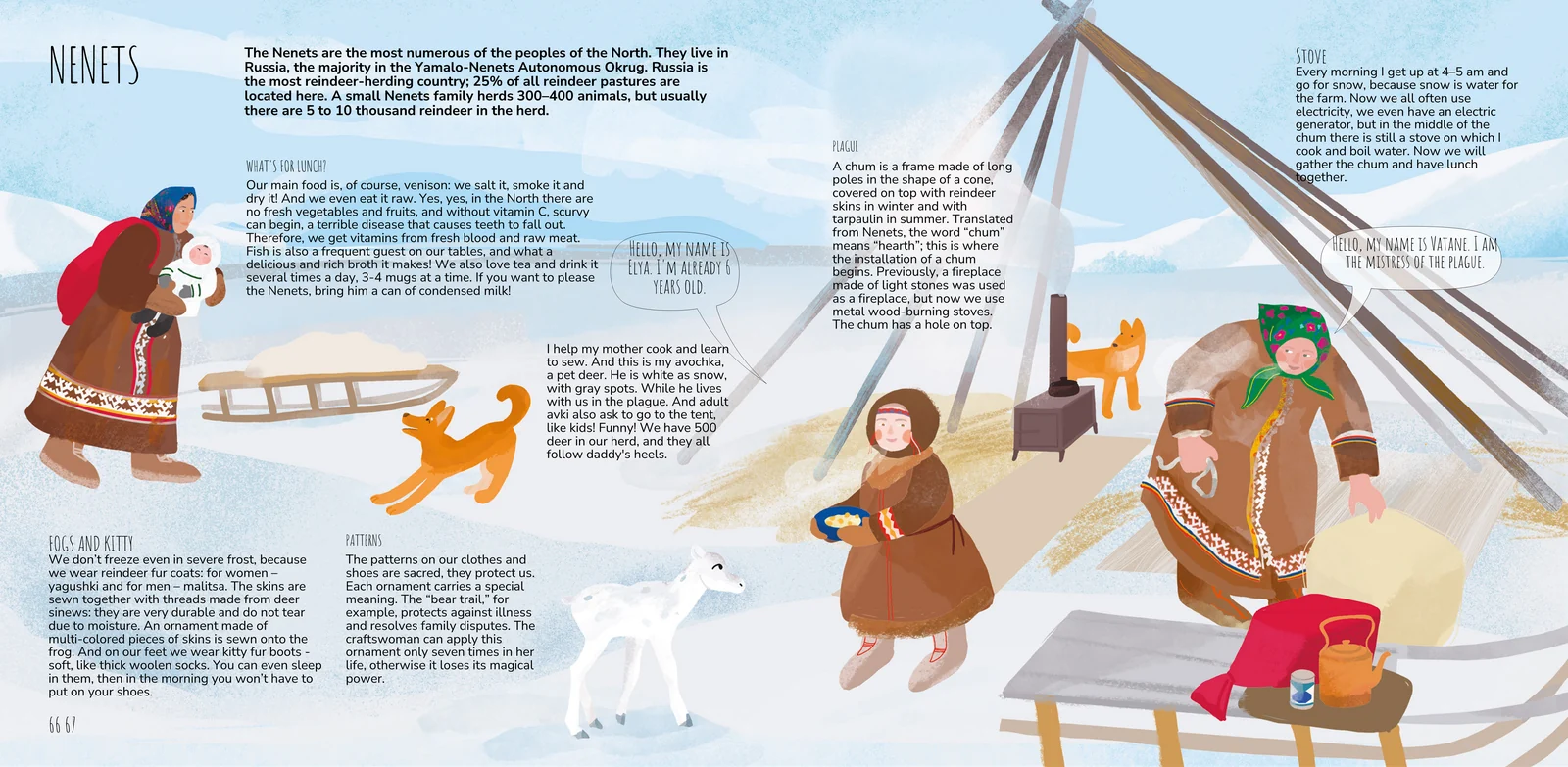
Spread from the Nenets chapter: a chum on the snow, a reindeer calf and labelled sections on the stove, fur clothing and patterns
Nenets reindeer herders · pages 66–67
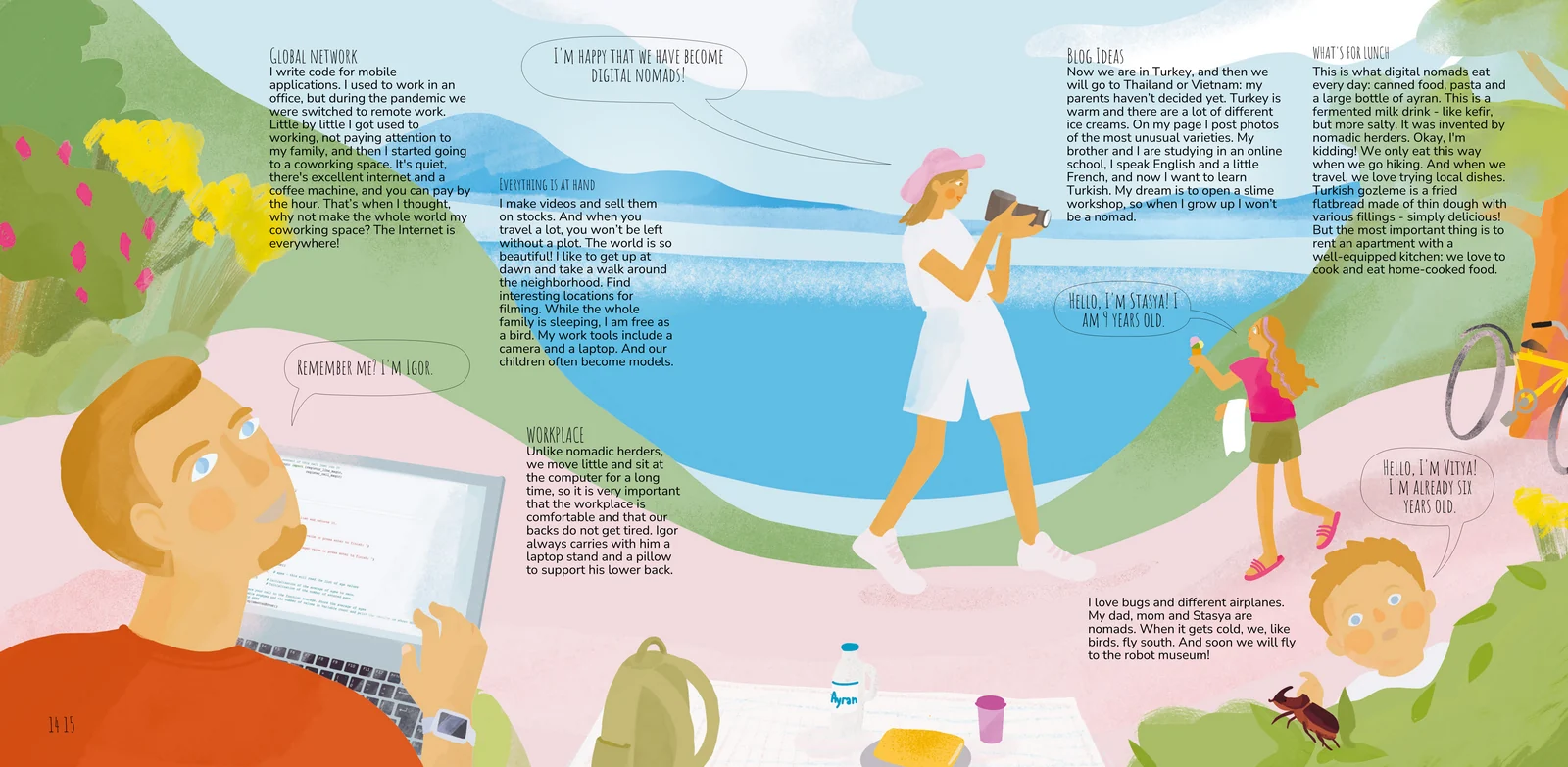
Spread from the Digital Nomads chapter: a family working and filming by the sea, with labelled sections on remote work and daily life
A digital nomad family · pages 14–15
A Mongolian woman in a traditional headdress

Created with specialist input

Written, illustrated and checked by specialists

Written and illustrated by Aigul Nigmetova, with scientific editing by anthropologist Dmitry Kanunnikov of the Museum of Nomadic Culture.

96 illustrated pages · Children’s non-fiction · World cultures · Geography · Age 6+

Original publisher
A Walk Through History
Original publication
2024
Original language
Russian
ISBN
978-5-907793-02-6
Rights
Available worldwide

Bring a different idea of home to your readers

Contact Librorus to request the full PDF and discuss translation rights for your language and territory.

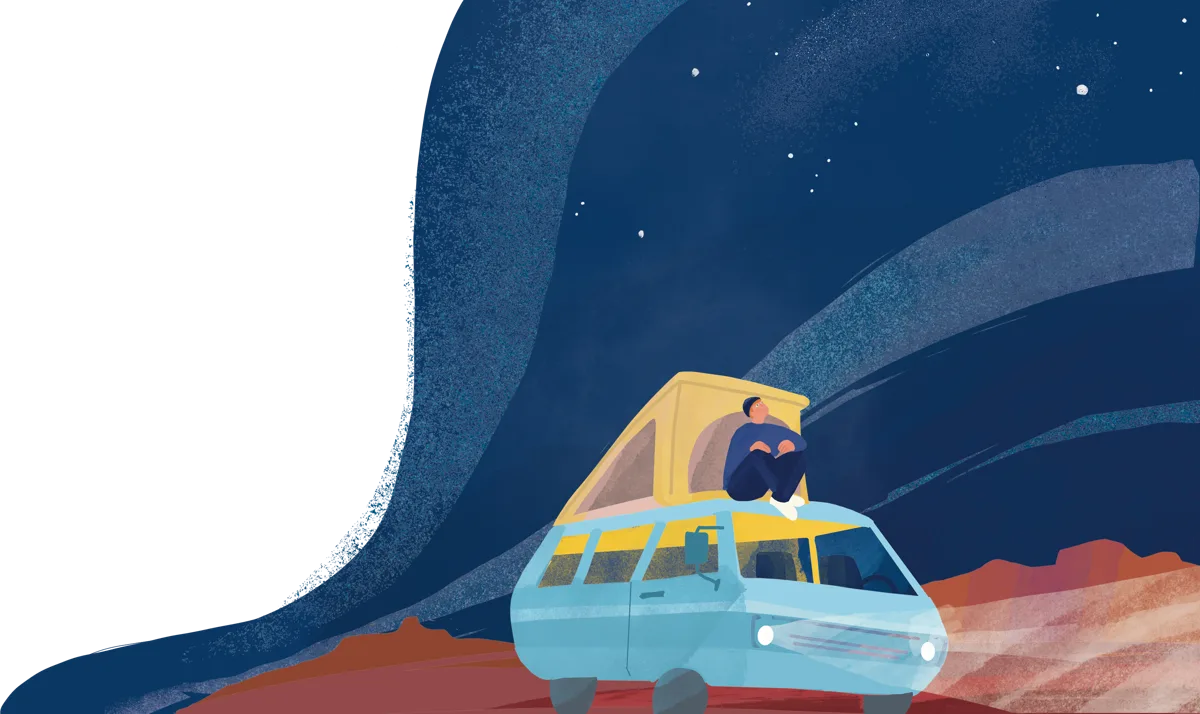
A camper van under a night sky, from the Vanlifers chapter